

Historic Sites
Domus Aurea
The Domus Aurea is the vast palace complex built by Emperor Nero after the fire of Rome in the 1st century CE. Its remains lie beneath the Oppian Hill and are known for surviving frescoes and vaulted rooms.
4.51.5K reviews
Neighborhood
Monti feels like Rome’s most walkable old-neighborhood blend of cobblestone charm, independent shops, and lively trattorias, with easy access to major sights like the Colosseum area and nearby historic churches and palaces. It suits travelers who want a stylish, central base with character rather than polished calm. Expect buzzy evenings, frequent foot traffic, and a neighborhood that rewards wandering over strict sightseeing efficiency.

The feel
Monti feels like Rome’s most walkable old-neighborhood blend of cobblestone charm, independent shops, and lively trattorias, with easy access to major sights like the Colosseum area and nearby historic churches and palaces. It suits travelers who want a stylish, central base with character rather than polished calm. Expect buzzy evenings, frequent foot traffic, and a neighborhood that rewards wandering over strict sightseeing efficiency.
Highly walkable, central base for sightseeing
Strong dining, wine-bar, and café scene
Atmospheric streets with local character
Things to do
The Domus Aurea is the vast palace complex built by Emperor Nero after the fire of Rome in the 1st century CE. Its remains lie beneath the Oppian Hill and are known for surviving frescoes and vaulted rooms.

The Forum of Augustus was one of the imperial forums of ancient Rome, built by Augustus and dedicated in 2 BCE. Its remains lie beside Via dei Fori Imperiali near Largo Corrado Ricci.
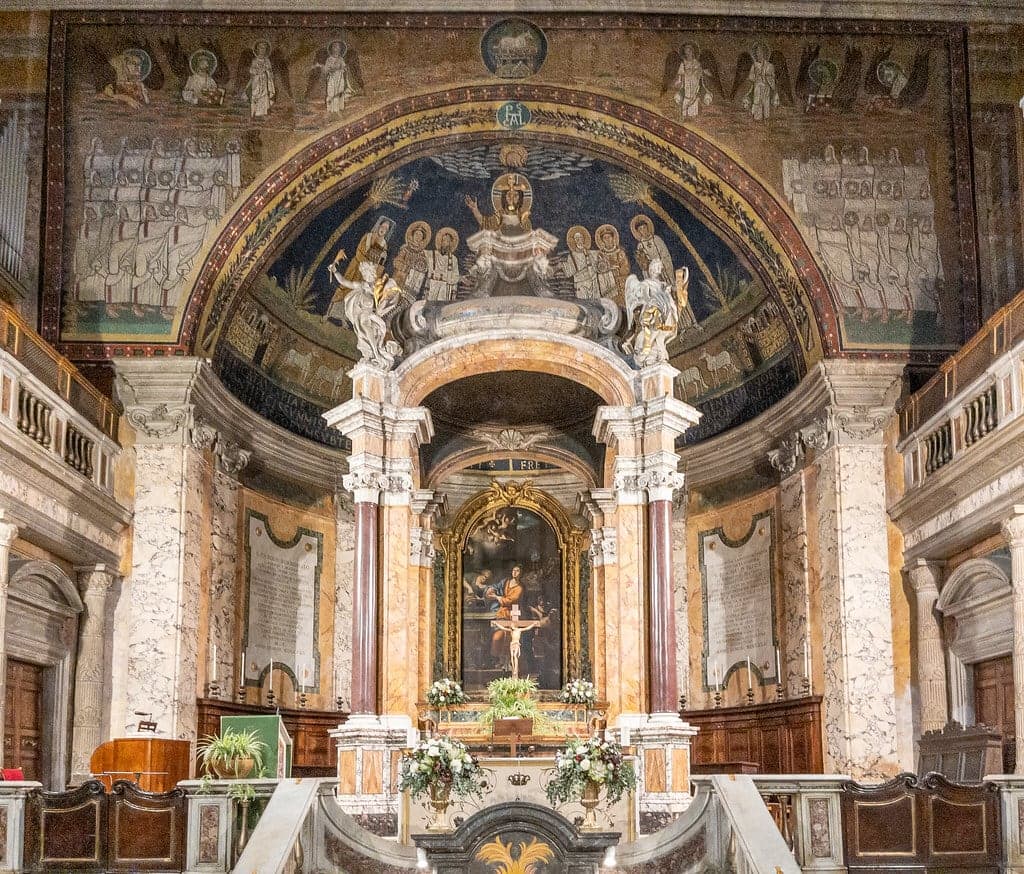
A 9th-century basilica in Rome, best known for its early medieval mosaics, especially in the chapel of San Zenone. It is dedicated to Saint Praxedes and stands near the Basilica di Santa Maria Maggiore.

The Mercati di Traiano is a large ancient Roman complex on the Quirinal Hill, traditionally associated with the Forum of Trajan. It now houses the Museo dei Fori Imperiali, a museum focused on the Imperial Forums and related archaeological finds.

The Column of Trajan is a Roman triumphal column in the Forum of Trajan, commemorating Emperor Trajan’s victories in the Dacian Wars. It is known for its spiral relief frieze that winds around the shaft.

Via Nazionale is a major street in central Rome that runs from Piazza della Repubblica toward Piazza Venezia. It is lined with shops, hotels, offices, and important landmarks.
More things to do
Find more places across Roma by choosing a category.
Explore another neighborhood
 #1274 things to do
Neighborhood
Municipio Roma I feels quintessentially Roman: layered with imperial ruins, grand churches, and pocket-sized viewpoints, yet still lively and walkable. Sightseeing is effortless, with landmarks like the Palatine, Tempio di Marte Ultore, and Santa Maria del Popolo nearby. Expect steady crowds, energetic streets, and strong café-and-restaurant character rather than late-night clubbing.
 #237 things to do
Neighborhood
Campitelli feels like a compact, deeply historic pocket of Rome, where ancient stones, church facades, and quiet lanes create a museum-like atmosphere. Sightseeing is highly convenient for landmark-hopping, while transport is typically best handled on foot with occasional public transit elsewhere nearby. Dining and nightlife are modest, leaning toward nearby central-Rome options rather than a busy local scene. Expect steady daytime visitors, calmer evenings, and
 #329 things to do
Neighborhood
Municipio Roma II feels like a cultured, central Rome base with a mix of grand historic sights and creative, lived-in neighborhoods. Around Santa Maria del Popolo, Santa Maria della Concezione dei Cappuccini, and Fondazione Pastificio Cerere, you get easy sightseeing variety, lively streets, and strong transit links, but also city noise, bustle, and a steady flow of visitors.
 #423 things to do
Neighborhood
Campo Marzio feels polished, central, and distinctly Roman, with elegant streets, designer shopping, and easy access to major sights. It suits travelers who want to drift between historic churches, riverfront promenades, and lively cafés without relying on transit much. Expect stylish crowds, steady daytime bustle, and evenings that are active but not rowdy.